Google route guide

Google transcribe audio to text, explained clearly

Google transcribe audio to text workflows can be useful when your files already live in Google's ecosystem. This guide compares that route with a dedicated audio transcriber so you can choose the right starting point.

Free to start · no signup
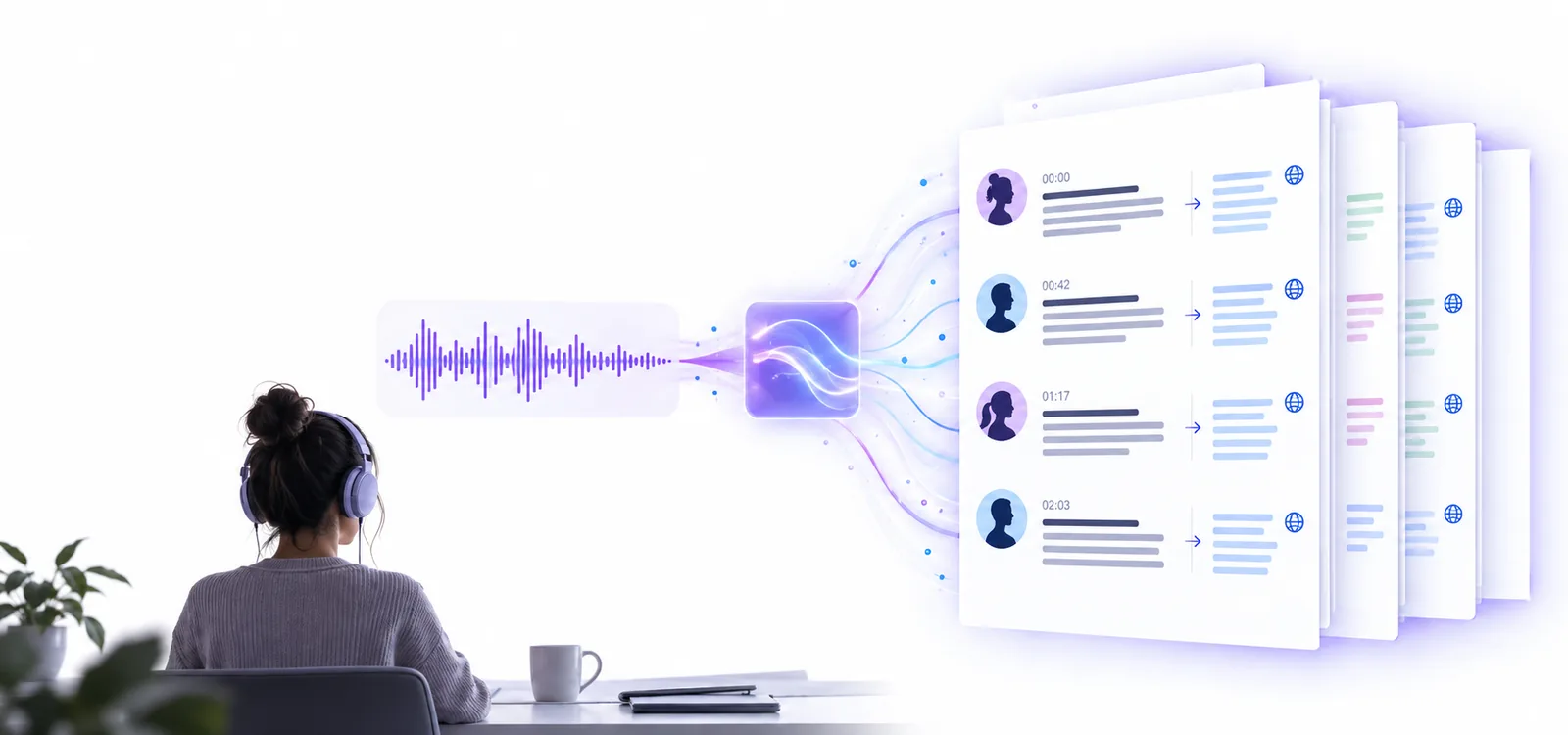
Audio Transcriber workspace showing an audio file becoming readable text

Related guides

Explore the audio transcription paths

Use these focused guides to compare tools, formats, and practical workflows before choosing an audio transcriber.

Who benefits

The 3 things only it does

The Google-oriented route is most useful when your work already starts in Google services or when you need a familiar place to review the result.

Google Workspace users

You keep recordings, notes, or shared project files in Google Drive and want transcription to fit that existing routine.

Less file movement between tools and a simpler handoff to collaborators.

transcribe audio recording to text
Meeting organizers

You need a written record after a call, interview, or planning session and want to search the conversation later.

A searchable draft that can be edited, summarized, or shared with the team.

online audio transcription examples

Students and researchers

You have a lecture, field recording, or interview that needs to become notes rather than remain trapped in an audio player.

Readable material that is easier to quote, review, and organize.

audio transcriber ai

Independent creators

You are turning a podcast segment, voice memo, or recorded idea into a rough script or working document.

A faster first draft before polishing names, punctuation, and structure.

how to use audio transcriber online

Start in minutes

How to start

A reliable workflow separates access from cleanup. Begin with the recording, confirm what Google route you are using, then review the returned text before sharing it.

  1. 1

    Choose the recording

    Select a file you are allowed to process and check that the speech is audible. A clean source gives any audio transcriber a better chance of preserving names and sentence boundaries.

  2. 2

    Send it through the Google route

    Open the relevant Google transcription workflow, provide the recording, and wait for the service to create its first text version. Keep the original file available for checking.

  3. 3

    Review and export

    Correct names, speaker changes, punctuation, and unclear passages. Then move the edited transcript into the document, notes app, or collaboration space where it will be used.

Route comparison

This entry point vs the general one

Both approaches aim to turn spoken content into text, but they differ in where the work begins, how much setup is involved, and how easily the result fits your existing process.

Google transcription route
Dedicated audio transcriber

Starting point

Google transcription route

Begins inside a Google-centered workflow or service

Dedicated audio transcriber

Begins in a focused transcription workspace

Best fit

Google transcription route

People already organizing files and collaboration in Google tools

Dedicated audio transcriber

People who want one clear place to upload and review audio

File handling

Google transcription route

May depend on the specific Google product and setup

Dedicated audio transcriber

Designed around common audio-to-text tasks

Editing focus

Google transcription route

Useful when the transcript will continue into Google documents

Dedicated audio transcriber

Useful when transcript cleanup is the main task

Collaboration

Google transcription route

Convenient for teams already using shared Google files

Dedicated audio transcriber

Convenient for a focused review before sharing elsewhere

Workflow clarity

Google transcription route

Can require identifying the right Google feature first

Dedicated audio transcriber

Usually presents the transcription action directly

Portability

Google transcription route

Strongest when the destination is already in Google's ecosystem

Dedicated audio transcriber

Better when you need a neutral, dedicated working step

Output preview

From recording to readable text

The important change is not only that speech becomes words. A useful audio transcriber also gives you a draft that can be checked, reorganized, and prepared for its final destination.

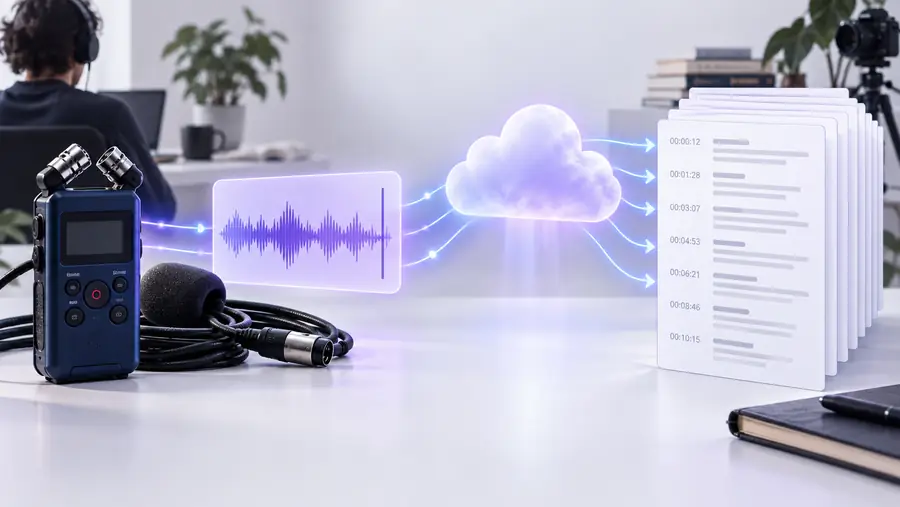
Audio recording prepared for a Google transcription workflow Audio source
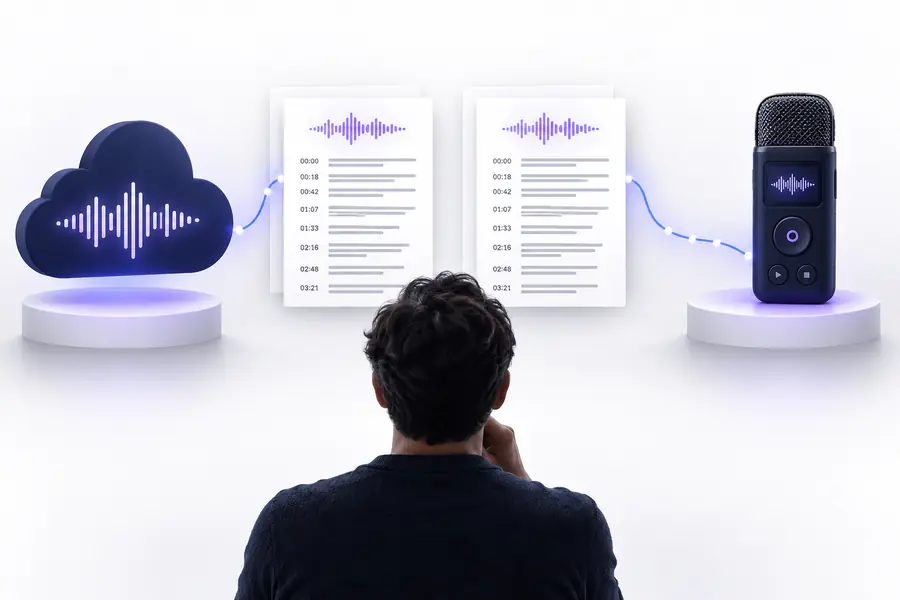
Readable meeting transcript prepared for editing Text draft
Always compare the draft with the original recording before treating it as final.

Workflow snapshot

What the route gives you

These reference points describe the practical shape of the workflow rather than promising automatic perfection.

Starting source for each transcription task
1 recording
Choose, process, then review the result
3 steps
Assumed—every draft still needs human checking
0 final edits

Know the boundaries

Limits

Google's route can be useful, but it is not a complete substitute for review or for every dedicated audio transcriber workflow.

It may not be one universal feature

Google offers different products and services, so the exact path can vary by account, file location, and available feature.

Workaround

Confirm the specific Google tool before uploading an important recording, or use a focused audio transcriber with a clearer upload path.

Raw audio quality still matters

Background noise, overlapping speakers, accents, distance from the microphone, and low volume can reduce transcript accuracy.

Workaround

Use the cleanest source available and manually check names, numbers, and technical terms against the recording.

Speaker labels may need correction

A generated transcript can struggle to separate people when voices overlap or participants change frequently.

Workaround

Review speaker turns yourself and add labels only after listening to the relevant passages.

A draft is not automatically publication-ready

Punctuation, paragraphing, timestamps, and formatting may still need attention before the text is shared or quoted.

Workaround

Treat the first output as an editable draft, then run a deliberate cleanup pass in your chosen document workflow.

Take the next step

Turn your next recording into a workable draft

If you want a straightforward place to begin, use Audio Transcriber for the first pass, then compare the text with the original audio. The workflow is designed to get you from spoken material to an editable result without unnecessary detours.

Transcribe audio now
  • Start with a recording you can review
  • Keep the original audio for verification
  • Edit names, speakers, and formatting before sharing

Common questions

Its own FAQ

Answers to practical questions about Google's route for turning recordings into text.

Google can support audio-to-text workflows through particular products and services, but the exact process depends on which Google tool you use. Check the current feature, supported input, and account requirements before relying on it for an important recording.

Start by identifying where the recording is stored and which Google service is intended to process it. Upload or provide the file through that workflow, then review the returned text in context rather than assuming the first draft is complete.

No single route should be assumed to support every format, size, language, or recording condition. Confirm the service's current requirements, and keep a compatible copy of the audio available if the first upload is rejected.

It can provide a useful working draft, especially when the recording is clear and speakers do not overlap. You should still check names, numbers, terminology, speaker changes, and any passage that sounds uncertain before sharing it.

Choose the Google route when your files and collaboration already center on Google tools. Choose a dedicated audio transcriber when the main goal is a clear upload, transcription, and review workflow with fewer decisions about which service to open.

Start transcribing
Start transcribing