Students
You have a lecture or study recording and need a searchable first draft before reviewing the material.
You get organized text that can make revision and quote-finding easier.
online audio transcription examplesFree browser workflow
An audio transcriber online free no sign up can help you turn a recording into editable text without creating an account first. Try the workflow with a short clip, then review the result before using it for anything important.
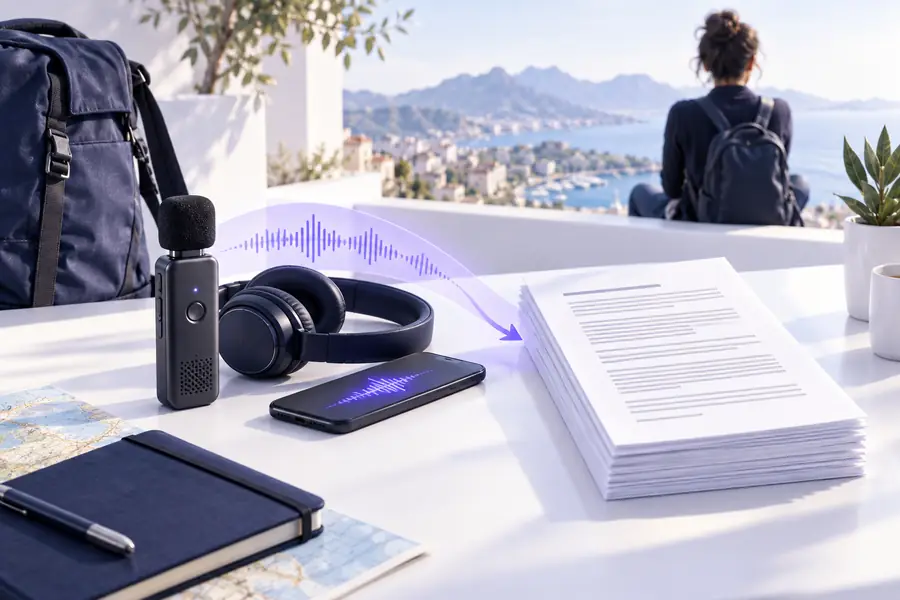
Skip account setup and move directly from a recording to a reviewable transcript, while keeping expectations realistic about quality and file conditions.
The best use case is one where speed and convenience matter, but a human can still verify names, numbers, and important wording.
You have a lecture or study recording and need a searchable first draft before reviewing the material.
You get organized text that can make revision and quote-finding easier.
online audio transcription examplesYou recorded a conversation and want rough notes without stopping to type during every answer.
You can scan the conversation, identify key moments, and verify the passages worth using.
transcribe audio recording to textA meeting recording needs a readable working draft before decisions and action items are shared.
The transcript gives everyone a common reference point for follow-up.
audio transcriber aiA voice memo or podcast segment needs to become an outline, caption draft, or searchable archive.
You can reuse spoken ideas without manually replaying the entire recording.
online audio transcription examplesA short workflow keeps the process accessible while leaving room for a careful review of the generated text.
Start with a clear audio file or a short clip. Reduce background noise where possible and avoid beginning with several unrelated recordings at once.
Use the browser handoff to submit the recording and describe the result you need, such as notes, dialogue, or a plain transcript.
Read through names, dates, figures, accents, and overlapping speech. Treat the first result as a draft until the important sections are checked against the audio.
These concrete characteristics explain why this route is useful for quick, low-friction transcription tasks.
Free access removes an initial barrier, but it does not remove the need for suitable audio or human quality control.
Heavy background noise, strong accents, low microphone volume, and overlapping speakers can produce gaps or incorrect words.
Workaround
Use the clearest available recording and replay uncertain sections while editing the transcript.
Names, legal language, medical terms, prices, and other high-stakes details should not be accepted without checking the original audio.
Workaround
Mark sensitive passages for manual verification before sharing or publishing them.
A free browser route may have practical limits around file size, duration, supported formats, or processing availability.
Workaround
Use a shorter test clip first and consult the workflow instructions if a file is rejected.
When people interrupt each other or sound similar, speaker labels can be incomplete or need correction.
Workaround
Review the dialogue manually and rename speakers using the surrounding context.
The right choice depends on whether you need a quick first pass or a repeatable workspace for many recordings.
First use
No-signup browser route
Begin with the recording and a task
Account-based transcription service
Create or access an account first
Setup friction
No-signup browser route
Minimal initial setup
Account-based transcription service
May include profile, workspace, or verification steps
Best for
No-signup browser route
A quick draft or occasional file
Account-based transcription service
Recurring work and organized projects
Quality control
No-signup browser route
You review the generated draft
Account-based transcription service
May include more editing or collaboration features
File constraints
No-signup browser route
May vary by free workflow and input
Account-based transcription service
Often documented within a managed workspace
Privacy decision
No-signup browser route
Check what happens to the submitted recording
Account-based transcription service
Review the service's retention and workspace policies
Ongoing organization
No-signup browser route
Save the transcript where you work
Account-based transcription service
May provide projects, history, or shared access
If you need a readable first draft without creating an account, begin with a clear, short recording. Review the output carefully, then decide whether the workflow fits your next file.
Transcribe my audioYes, this type of browser workflow is designed to let you begin without creating an account. Start with a short, clear recording so you can check the result and understand any file or processing limits.
Supported formats and limits depend on the transcription route handling the file. If your recording is rejected, try a commonly supported audio format or test a shorter clip before converting the whole recording.
A generated transcript is best treated as a first draft, especially when the audio includes noise, accents, overlapping speakers, or specialist vocabulary. Verify names, figures, quotations, and other important passages against the recording.
The online workflow is intended to start in a browser, so there is no desktop installation step for the initial transcription. You still need a recording that can be selected or submitted through the browser.
Speaker separation may work better when each person speaks clearly and does not interrupt another speaker, but it is not guaranteed to be perfect. Review and rename speaker labels manually before sharing the transcript.